
Bishop Steven calls for government regulation of AI in final Lords speech
Bishop Steven urged governments to regulate artificial intelligence warning of rapid technological change risks

Bishop Steven sat down with BBC Radio Oxford's Phil Mercer to look back on his time in the Diocese of Oxford and looking forward to his retirement in July. Read…
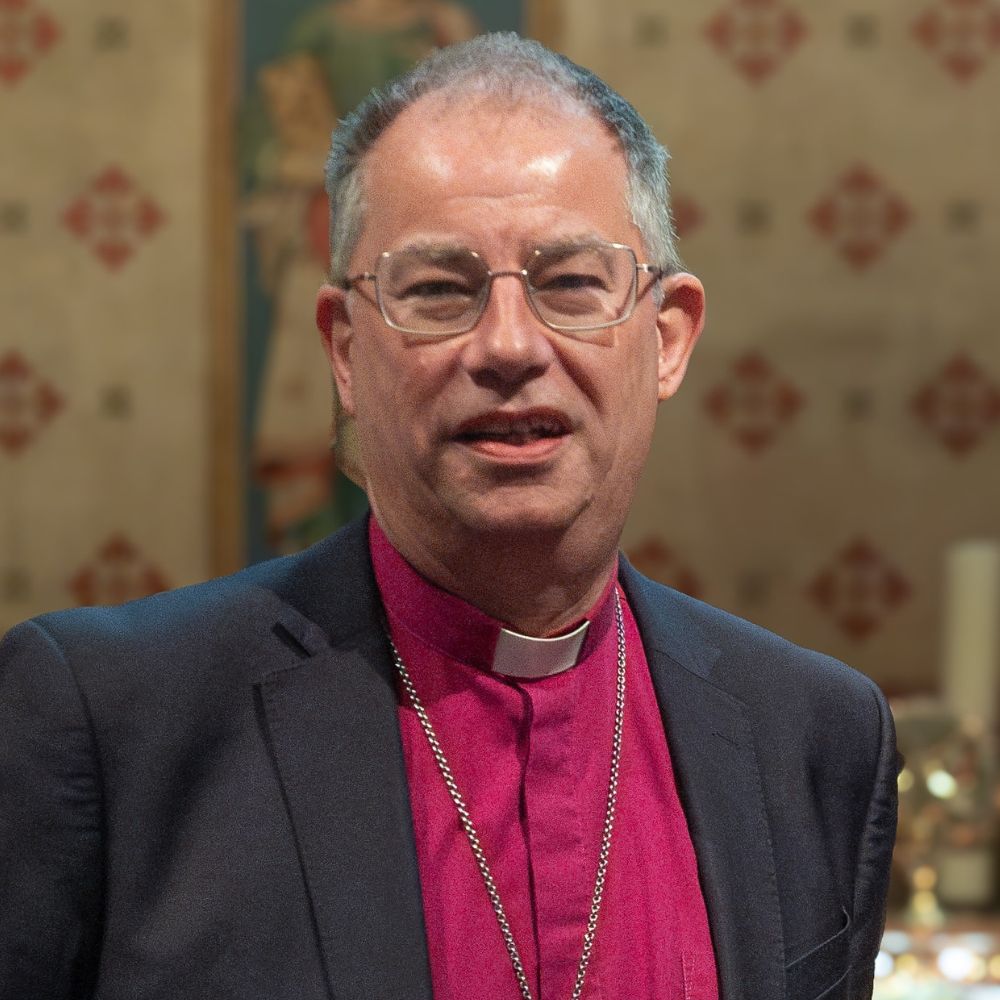 Bishop Steven sat down with BBC Radio Oxford’s Phil Mercer to look back on his time in the Diocese of Oxford and looking forward to his retirement in July. Read their conversation or listen on our SoundCloud channel, link below.
Phil Mercer: Now the Bishop of Oxford, the Rt Revd Dr Steven Croft, is going to step down next year from his role. He’s one of the most senior bishops in the Church of England. We wanted to get his thoughts and just look ahead as he prepares to change life, I guess, and have a little bit more time to himself. But at the same time, we want to look back a little bit over the last 10 years for us here, but actually 17 odd years, I think, as Bishop. And then there’s an entire life before that, Bishop Steven. Thank you so much for coming into the studio.
Bishop Steven: It’s great to be here, thank you.
Phil: After 10 years at the Diocese of Oxford, you have to retire, don’t you? At the age of 70.
Bishop Steven: I have to retire at 70. I’ll be retiring just after my 69th birthday.
Phil: Yeah, so you don’t get much choice about it. Are you happy with that?
Bishop Steven: Yeah, I’m very content. I mean, 10 years is a good kind of round number to finish on and I’m looking forward to that. And there’s been a sense moving through the last few months of completing that you never finish the job, but completing what I’ve been given to do as Bishop of Oxford and building up a good team for the future across the diocese and looking forward to a new chapter, which is great. I shall miss the place and the people enormously. But there’ll be lots of things I’m looking forward to as well, God willing.
Phil: We can talk a little bit more about that in a while, because I’ve got you for a little bit, which is fantastic. I just wanted to sort of look back a little bit, frankly, we could have talked about many, many different things, because obviously as bishop, you’ve got fingers at many pies, from local, properly local, through to big national and international stories as well. For the diocese, for Oxford, how are things? Do you think it’s in a good position at the moment?
Bishop Steven: I do thanks, thanks be to God and to lots of thousands of people who work very hard in local churches, both clergy and volunteers. So as I look back on the 10 years, it really divides into before Covid and after Covid. So I was here for four years before the pandemic, two years of the pandemic, which were extraordinarily hard for the region, including for the churches. And then it’s been four years of energy slowly coming back into clergy and congregations you know and congregations growing actually over those four years. Growing back not quite to what they were before Covid yet.
But there has been a tremendous sense this year and a great deal of energy flowing in and we see that in the diocesan structures by the number of parishes doing building projects, the number of parishes applying to our Development Fund, the number of children and young people’s workers being appointed. The kind of vigour and life that’s there. It’s been wonderful to see. I am very hopeful, actually.
Phil: That must give you, as you say, a great hope. Now, there’s been an awful lot of things that you’ve been working on at a national level and spearheading for the Church of England in a lot of ways. You were the most senior bishop to express support for same-sex marriage. And I’m quite interested to talk a little bit more about that, because in the last few months, there’s actually been news around this, or maybe not news, I think, in some cases.
Can I just play you a little bit, pop your headphones on, because a little earlier we were hearing from the Revd Robin Sharples, who’s the vicar of Holy Trinity in Bracknell, and he also has been focused a lot with his church on same-sex marriage, and he had this to say.
Revd Robin Sharples: There’s a comment from the Dean of Canterbury who talks about the fact that the bishops have stopped talking about people and they’re just talking about process and it’s almost like they’ve retreated from those whom they serve and are hiding.
Phil: So this is the fact that the Synod, which is the Parliament for the Church of England, had voted to bring in some changes around this a few years ago, back in 2023. And since then, it’s been taking quite a lot. And now we’ve got this situation where that process of allowing same-sex blessings and things like that kind of feels like it’s on hold.
Bishop Steven: Yeah, I mean, we’ve made some progress. So, we’ve introduced prayers of love and faith. There was a further debate about whether those prayers of love and faith could be used as standalone services. The bishops decided, at a meeting in October together. I wasn’t able to be there, sadly, because I just had a knee operation. They decided that in order to authorise that there need to be a further synodical process which needs a two-thirds majority.
So I’m confident that will come back, but the delay is very frustrating. For those like Robin and myself who absolutely want to see greater inclusion. And also there needs to be a further process before clergy who are in same-sex marriages themselves can be licensed to new roles. So there will be some proposals coming to the February Synod, I hope, which will provide a pathway forward for that. But basically, I do agree with what Robin was saying, that it’s immensely frustrating and disappointing for those who’ve been working towards greater inclusion. And there’s another chapter of this story still to be written.
Phil: Might well happen when you’re not a bishop anymore.
Bishop Steven: Well, yes, certainly not in this role. When you step down from being a bishop, you remain a bishop of the church, but you don’t have a particular responsibility. I probably won’t be silent on these questions.
Phil: Maybe you can be even more vocal than you have been. It’s interesting because that comes around at a time where the Church of England is going through change. You have that. You have an incoming Archbishop of Canterbury who is a woman. That’s a first. And for the Anglican Communion, so the Church of England is this huge organisation that spreads around the world. Is it going to be harder and harder to keep everybody together?
Bishop Steven: I think there’ll be tensions with some of the Communion. I think many, the majority of the Communion, will absolutely welcome Bishop Sarah’s appointment, as I do very much. One of the things I do for the Communion is I’ve chaired something called the Anglican Communion Science Commission, which brings together bishops and scientists across the world. And we had a residential in Virginia last year bringing together people from many different provinces, including across Africa. And there was just this great sense of working together.
The questions which often hit the press as dividing the Communion, people had different views on those, but it doesn’t stop us doing fantastic work together and being a global church together, which is what we’re called to be.
Phil: Let’s talk to you about safeguarding within the Church of England, because one of the reasons why the change at the top and the new Archbishop of Canterbury was over the reaction to then Archbishop of Canterbury, Justin Welby’s responses to safeguarding issues. This is something that you’ve had to tackle yourself and have been censored for being slow to respond. Is the Church of England learning lessons?
Bishop Steven: I think we are learning lessons, yes we are, and changing our structures and certainly the investment in safeguarding by all dioceses including Oxford is hugely more than it was 10 years ago when I came or 17 years ago when I went to Sheffield, both nationally and in diocese. I think our processes are better, I think our churches are safer thanks to better training and the work of our volunteer safeguarding officers in parishes.
We have a brilliant safeguarding team in the Diocese of Oxford, but we’re not complacent. And the thing we still need to do better as a church is listening to the voices of survivors and connecting survivors with our safeguarding processes so we really understand at depth and the whole community of the church understands at depth the cost of when safeguarding goes wrong and isn’t done well.
Phil: I suppose what people most want to hear is the fact that it can’t happen again.
Bishop Steven: Absolutely, and I think the best way it can’t happen again is for us not to be complacent and say it could never happen again, is to be alert to the risks and the dangers.
Phil: Now, I was going to play a song here and then get to the news, but I think I’m to keep chatting to you for little bit because it’s just so nice to have you here. I do want to look ahead a little bit as well. There is a challenge also facing the Church right now, which was an interesting one I didn’t see coming, which is as a result of the far right. Just a few months ago, we had Tommy Robinson, that very controversial figure wading in with the Church, which I don’t think anybody saw coming, which is putting the Christ back into Christianity and being a Christian nation. How should we respond to that?
Bishop Steven: I think we should respond with real caution to what the Far Right are doing, which is appropriating Christian symbols and a certain story of Christian Britain and equating that with basically white, native British culture and using that to stoke the rise in Islamophobia, the rise in anti-Semitism that we’ve seen and engaging with the whole migration debate from that.
So I think as churches, as the Church of England, we’ve been very careful to say Christ is already part of Christmas. We don’t need to put Christ back into Christmas. Attendance at church services across our diocese, I’ve been hearing, have been significantly up again this year. People are celebrating Christ at the heart of Christmas. But we need to be very cautious about appropriating Christ into this Far Right narrative.
Phil: You’ve been Bishop of Oxford for nearly 10 years, it’ll be 10 years by the time you actually retire. How are you going to look back on your time?
Bishop Steven: I’ll give thanks really for brilliant people I’ve worked with, a wonderful place to serve, particularly the city of Oxford, which is so important to me and to my story, because I’ll be leaving Oxford 50 years after I arrived as an undergraduate. Which is, you you kind of see, you know, see your life flash before you. huge thanksgiving.
I’ll certainly be saying to myself, I didn’t get everything right across that time, but my kind of thread running through it will be the grace of God enabling thousands of people to make Christ known and to help create a more Christ-like church, which is what we have as our central passion in the diocese, a church which is contemplative, compassionate, and courageous.
Phil: We wait now to find out when we get a new Bishop of Oxford. I know the Church of England tends to run quite slow with this process, are we likely to wait a while?
Bishop Steven: At least a year, I think, after I go. So the process of consultation has started. Bishop Gavin, Bishop Dorchester will step up to be Acting Bishop of Oxford for the vacancy, and there’s a really strong team in place with Gavin and with Bishop Mary in Reading and Bishop Dave in Buckingham. The diocese will elect six representatives for the Vacancy in See Committee, and I would imagine the conversations and decisions will be made in about a year’s time, maybe 13 months’ time from now.
Phil: Okay, so this letter that I’m about to suggest you write is going to gather a bit of dust. You know, there’s that tradition when prime ministers change, when chancellors change and so on, that a letter gets left on the Will you write one and what would you put in it?
Bishop Steven: I think I officially get to write a letter as part of the process. I mean, there’s so much I’d want to say actually, but I think I’d want to say, to my successor, which I’m sure they will, cherish the people of this region because it’s fantastic crossroads of the world, this diocese. And from the local rural churches to the massive urban churches that we have, from the Cathedral to Cornerstone in Milton Keynes to Reading, it’s just a wonderful place to be and a hugely privileged role. Keep the diocese, try and keep the diocese, centred on Jesus, the message of Jesus, and the good news of Jesus to make Christ known.
Phil: Well, you’re not gone yet, so I’m sure I will speak to you again before now and then. But thank you so much for coming in. Have a great New Year. The Bishop of Oxford, the Rt Revd Dr Steven Croft there. We wish you much happiness in whatever comes next.
Bishop Steven: Thank you, Phil. Thank you and can I say thank you to BBC Radio Oxford for being here and for all that you do.
Bishop Steven urged governments to regulate artificial intelligence warning of rapid technological change risks
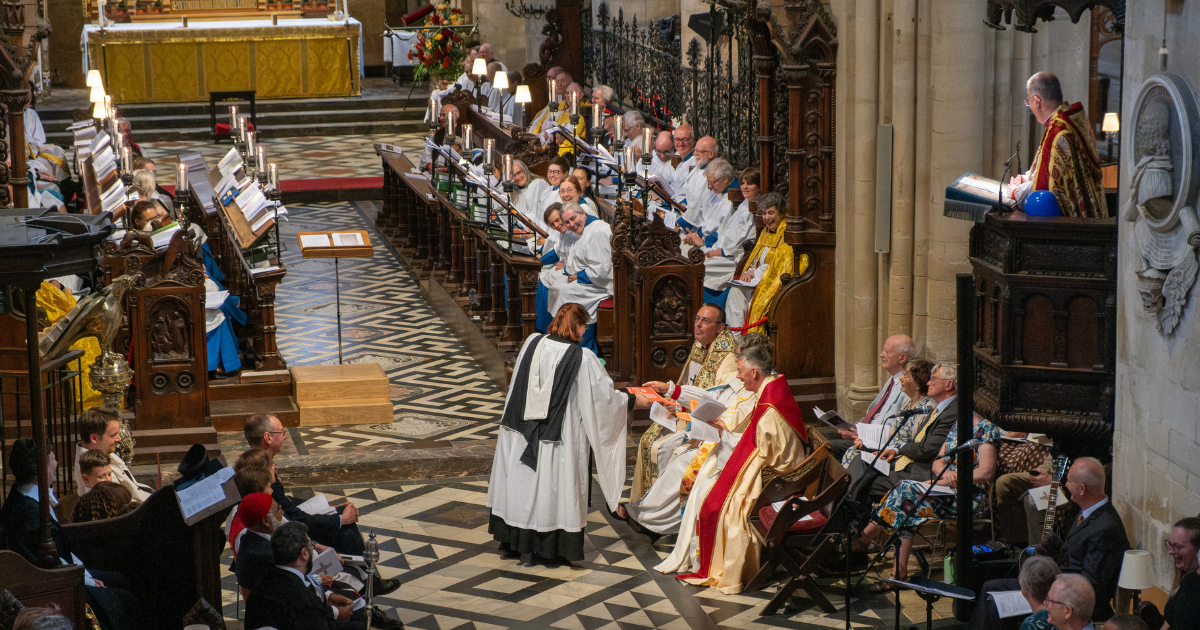
Full photo gallery from Bishop Steven’s farewell service. Clergy, church leaders and communities from across Berkshire, Buckinghamshire and Oxfordshire gathered on Trinity…
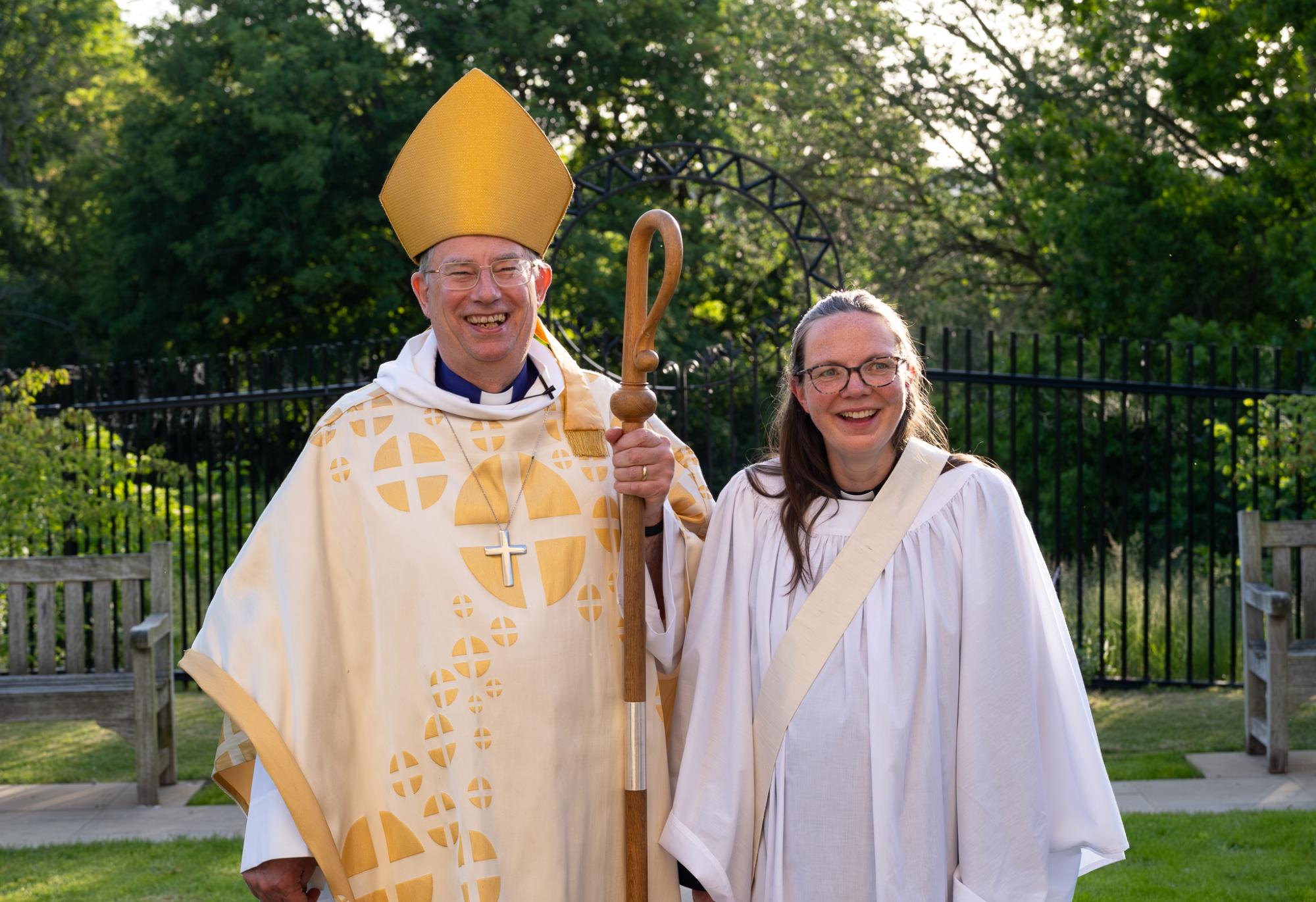
Revd Jane Barlow was ordained deacon on Pentecost Sunday at St Mary’s Church, Iffley. The special service was led by…
As faith and civic leaders in Oxfordshire and the Thames Valley we were very disturbed and saddened to learn that…
As The Rt Revd Dr Steven Croft prepares to lay down his ministry as Bishop of Oxford later this year,…
A statement from the Oxfordshire Faith and Civic Leaders Group and the Thames Valley Faith and Civic Leaders Group On…

Gospel reading: Mark 15.1-39. All across the world, women and men on every continent are walking through the events of Holy…
More than 100 Christian leaders have signed an open letter raising concerns about climate misinformation on GB News. The letter…
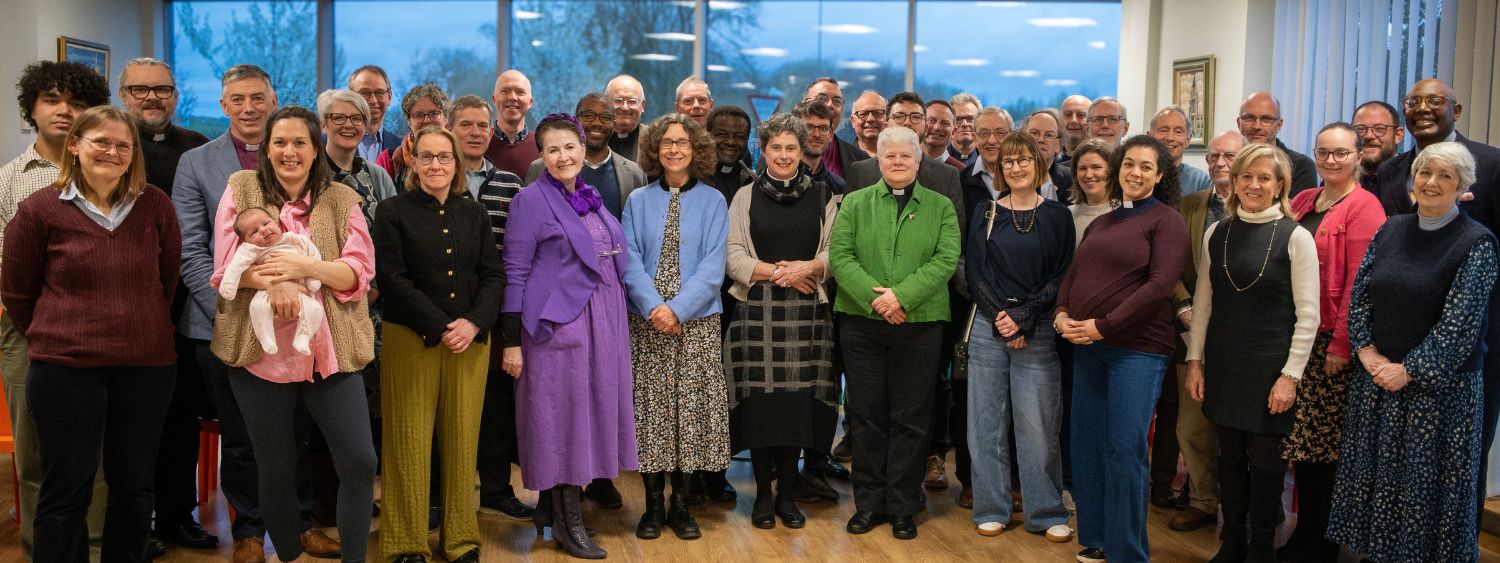
Significant progress has been made in the process to identify the next Bishop of Oxford. We have created and published…

Diocesan Synod were blessed by the presence and contributions of young people from across the diocese in their first meeting…